 Lyon IndustriesProfile 01
The Technologist
ChristopherLyon.
Strategic technologist working on the five to ten year horizon. Lyon Industries is the open archive of that work. Research, white papers, cookbooks, and shipped projects, published in full.
- Strategic Technology
- Long-Horizon Research
- Applied Frontier
- Frontier Hardware
- Applied AI

- Role
- Strategic Technology
- Horizon
- 5 to 10 years
- Output
- Studies · Code · Prototypes
- Mode
- Open archive
The Wedge
The positionFrontier programs fail at the seams between disciplines, and between the science and the business case. The work here exists to close those seams. Point to what matters, name what doesn't, put a working prototype where a deck would otherwise sit.
- Sees the horizon
- Strategic technology on a five to ten year view. Which frontier bets are real, which are theatre, and where the curve actually bends before consensus catches up.
- Cuts the noise
- Mechanism over narrative. Hyped claims stripped down to their physics, economics, and operating envelope. The failure modes that decide the program named in plain language.
- Ships the build
- Electrical, mechanical, software, and strategy in one head. The first useful version of the thing: runnable, citable, pressure-tested. Not a deck, not a thesis.
Operating Range
Disciplines under one headMost engineers go deep on one discipline and hand off at the boundary. Most strategists never touch the work. The studio is built around the people who do both, in the same week.
- Electrical Engineering
- Schematic capture, PCB layout, power, embedded firmware.
- Mechanical Design
- Parametric CAD, structural and thermal reasoning, manufacturing.
- Software & Systems
- Full-stack, control systems, applied ML, infrastructure.
- Applied AI
- Frontier model usage, agentic systems, evaluation, deployment.
- Strategy
- Long-horizon programs, capital allocation, technical risk.
- Operations
- Lifecycle, supply, cost, schedule, compliance.
The Evidence
Full archive →The portfolio is the argument. Featured published surfaces, cited, dated, and built to be inspected by someone who already knows the field.
 ResearchMAY 07, 2026Humanoid Robotics: The Factory Is The First HomeA source-dense research brief on humanoid robotics progress: what changed in hardware and AI, which deployments are real, where economics close first, why safety remains the gating system, and what timelines are defensible.
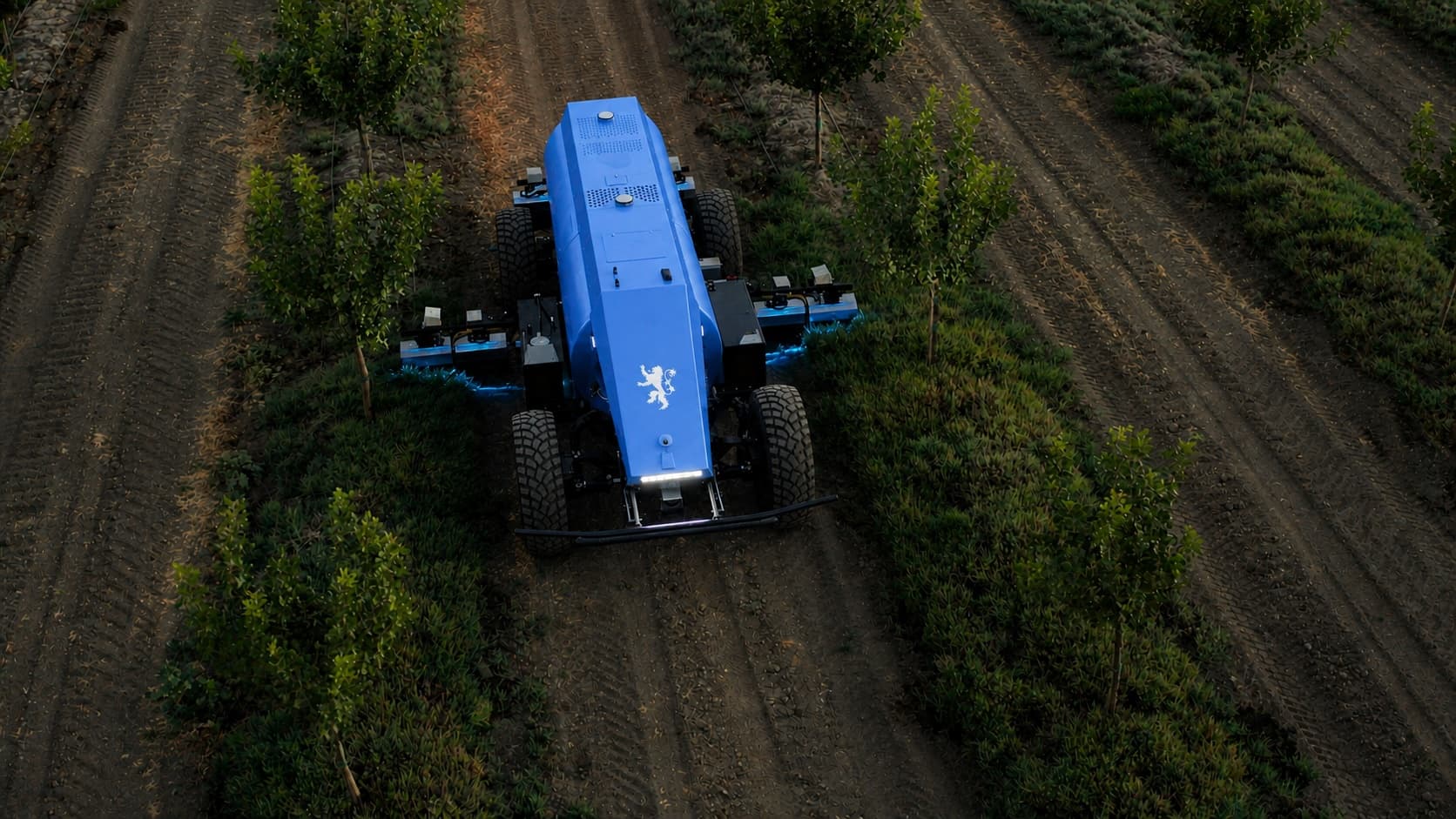 ResearchMAY 05, 2026Agricultural Robotics: The Farm Is Becoming a Control SystemA research map of agricultural automation from greenhouse cells and spray drones to autonomous tractors, RTK guidance, ISOBUS, and robot fleets: what already pays, what still breaks, and what infrastructure has to exist before autonomy becomes normal farm capacity.
 White PaperMAY 05, 2026Low-Cost Field Autonomy InfrastructureA solar-powered control mast and modular robot backpack architecture that lets farms run supervised robot fleets without a vendor-locked autonomy stack - costed, source-traced, and bounded by named risks.
Lyon Industries
The studio methodTake a frontier idea, map the evidence, name the constraints, build the first useful version, and publish enough that a serious peer can inspect it.
- Map
- Long-form studies on the technical questions that decide where capital, programs, and policy go next. Source-backed, mechanism-first, allergic to hype.
- Model
- Cost models, simulations, and reproducible calculations. Every load-bearing claim earns its keep against numbers or a documented assumption.
- Build
- Prototypes, runnable code, working tools, and open-source artefacts. The first useful version, shipped where the paper would otherwise stop.
- Publish
- Studies, white papers, cookbooks, and project entries published openly. Citable, indexable, and free to inspect, reproduce, or pressure-test.
Editorial standard
“If a peer can verify it in an afternoon, it is worth publishing. If they cannot, it is not finished yet.”